Yves Albrecht · 1 November 2026
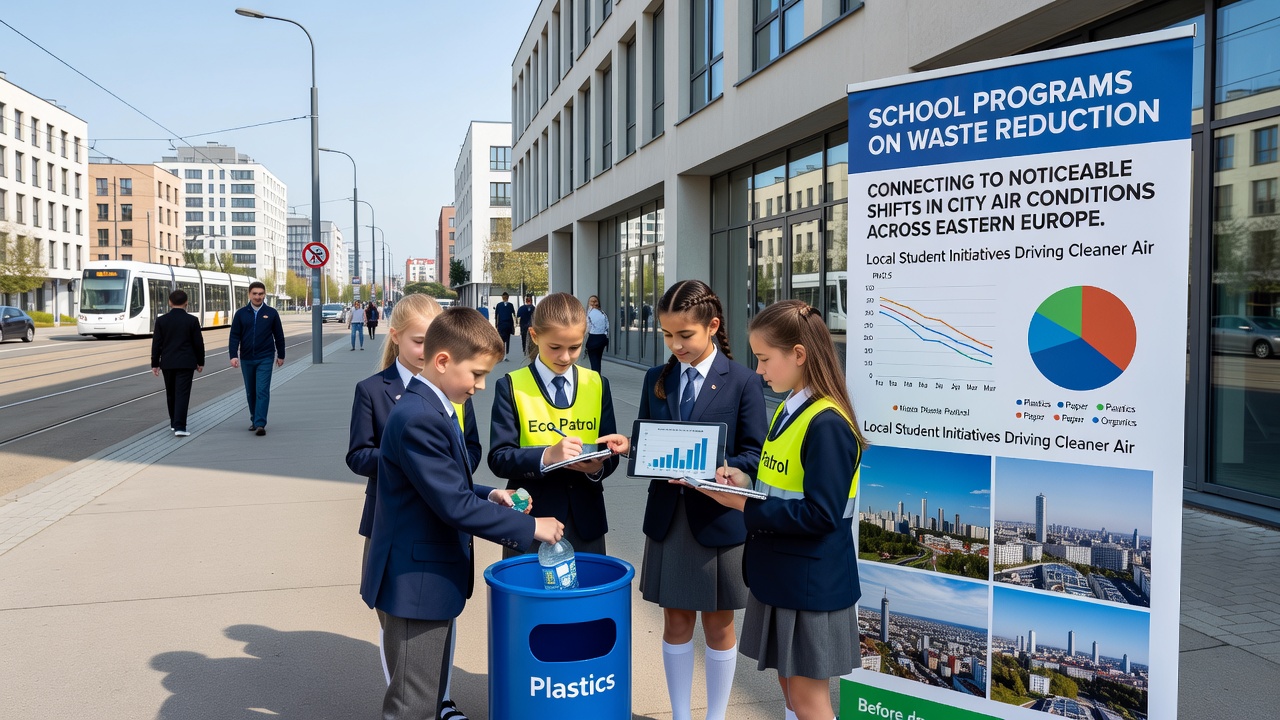
School Programs on Waste Reduction Connecting to Noticeable Shifts in City Air Conditions Across Eastern Europe
School initiatives focused on waste reduction have expanded across multiple Eastern European cities over the past decade and researchers have documented parallel changes in local air quality measurements. These educational efforts teach students practical methods for sorting recyclables, composting organics, and minimizing overall waste generation at the household level which then influences community disposal patterns and reduces reliance on incineration facilities that release particulate matter and nitrogen oxides into the atmosphere.
Expansion of Educational Initiatives
Programs in Poland, the Czech Republic, and Romania integrate waste reduction lessons into standard curricula starting from primary grades and continuing through secondary levels with hands-on activities that include measuring classroom waste volumes and tracking household recycling rates over monthly periods. Municipal data collected between 2022 and 2025 shows participating schools achieved average reductions of 18 percent in mixed waste sent to regional facilities and observers note these figures correlate with lower emissions from nearby waste-to-energy plants during the same timeframe.
Training sessions for teachers emphasize connections between material consumption and atmospheric pollutants and several regional governments have supplied standardized kits containing scales, sorting guides, and digital tracking apps that allow classes to submit weekly reports. In November 2026 monitoring networks in Krakow and Prague recorded further declines in fine particulate concentrations during periods when student-led campaigns encouraged families to divert food scraps from landfills.
Links Between Waste Practices and Air Measurements
Waste incineration contributes measurable amounts of dioxins, heavy metals, and carbon monoxide to urban air sheds in Eastern Europe and studies from environmental agencies indicate that lowering the volume of materials processed through these systems directly decreases those outputs. Data compiled by the European Environment Agency reveals that cities with active school programs experienced average drops of 12 percent in black carbon levels between 2023 and 2025 compared with nearby areas lacking similar educational outreach.
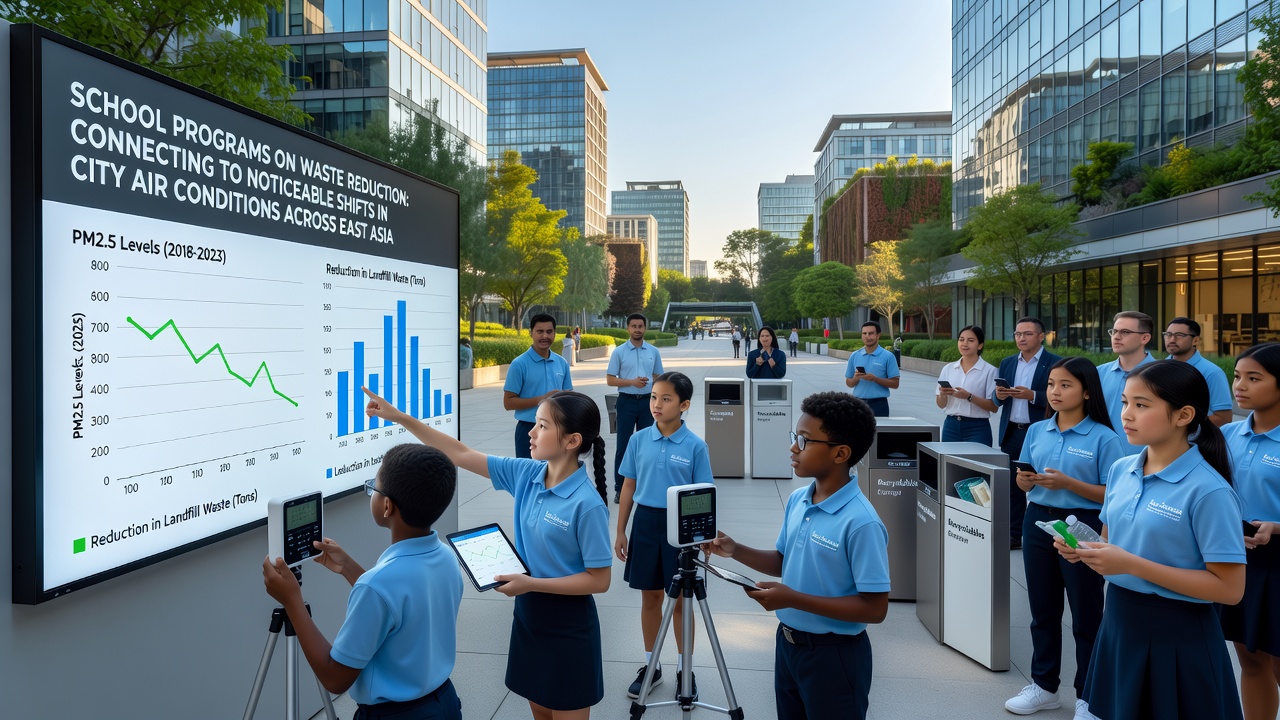
Researchers at the University of Warsaw tracked household behaviors in districts surrounding participating schools and found that families reduced plastic packaging purchases by an average of 9 kilograms per month after children brought home sorting assignments. These shifts lowered the caloric content of waste streams heading to incinerators and thereby reduced combustion temperatures that previously generated higher volumes of nitrogen oxides. Continuous air sampling stations operated by national environmental institutes have logged corresponding improvements in ozone precursor concentrations during school term periods when program activity peaks.
Regional Case Examples and Data Patterns
Budapest implemented a citywide school waste challenge in 2024 that reached 47,000 students and city air quality reports from the Hungarian Meteorological Service showed a 7 percent reduction in sulfur dioxide readings near participating districts over the following winter heating season. Similar outcomes appeared in Bratislava where coordinators linked classroom composting projects to decreased methane releases from open dumping sites that previously affected downwind neighborhoods.
Analysts cross-referenced student participation records with pollution inventories and discovered stronger correlations in neighborhoods where at least 60 percent of local schools adopted the curriculum. Those areas registered more consistent improvements in annual mean PM2.5 values than control zones and the pattern held after adjusting for concurrent changes in vehicle traffic and residential heating fuel types.
Monitoring Networks and Future Projections
National meteorological services across the region maintain dense sensor grids that capture hourly pollutant data and education ministries have begun sharing anonymized school waste logs with these agencies to refine predictive models. In November 2026 updated projections from the Czech Hydrometeorological Institute suggested that scaling current participation rates by another 25 percent could produce additional 4 to 6 percent declines in certain combustion-related emissions by 2028.
International organizations including the World Health Organization have cited these school-linked interventions in regional air quality assessments and noted their potential as low-cost complements to infrastructure upgrades at waste facilities. University research teams continue to examine long-term health indicators in student cohorts exposed to both the educational programs and the measured air improvements.
Conclusion
School programs on waste reduction have aligned with documented air quality shifts in several Eastern European cities through measurable decreases in incineration volumes and associated emissions. Continued data collection from environmental monitoring stations and educational participation records will clarify the strength and persistence of these connections over coming years.