Sam Krüger · 15 November 2026
How Polish Export Firms Are Quietly Integrating Biodegradable Materials to Meet Shifting Global Demand Patterns
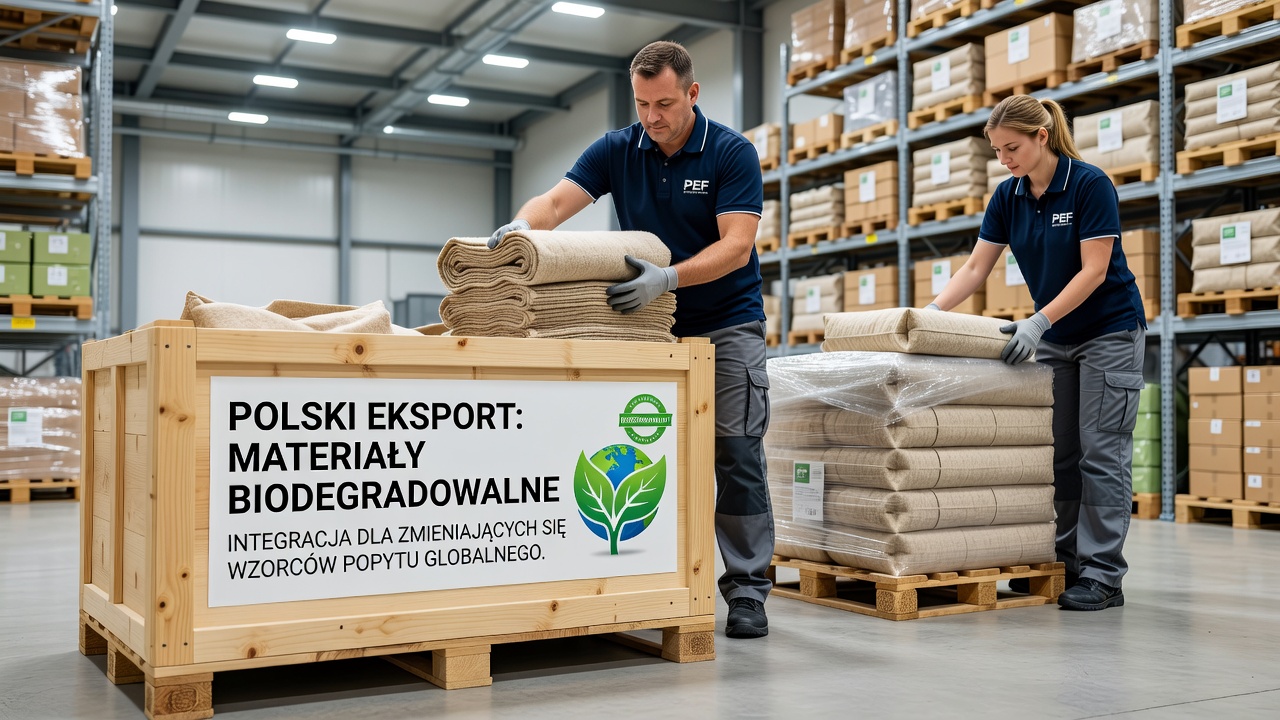
Polish export companies have begun incorporating biodegradable materials into their supply chains as international buyers adjust preferences toward sustainable options, and this shift aligns with regulatory changes across major markets. Data from the Polish Chamber of Commerce shows that export volumes in food processing, textiles, and electronics sectors grew by 12 percent in the past year while firms replaced conventional plastics with alternatives derived from corn starch, cellulose, and algae-based polymers. Observers note that many companies started these transitions quietly to avoid supply disruptions yet the cumulative effect appears in trade statistics released through November 2026.
Drivers Behind the Material Switch
Global demand patterns changed after the European Union updated its packaging and packaging waste regulation in late 2025, requiring that all packaging placed on the market contain at least 35 percent recycled or biodegradable content by 2030. Export firms in Poland responded because the country ships over 40 percent of its manufactured goods to EU partners, and non-compliance would block market access. Figures from the European Environment Agency indicate that similar requirements now appear in Canadian and Australian import rules, which together account for an additional 18 percent of Polish exports. Researchers at the Warsaw University of Technology documented that companies testing starch-based films reduced packaging weight by 22 percent on average, which lowered shipping costs while meeting new compostability standards.
Practical Integration Steps Across Sectors
Firms integrate these materials through phased supplier contracts rather than abrupt overhauls, and they often begin with secondary packaging such as fillers, labels, and outer wraps before moving to primary containers. In the food export segment, which represents Poland's largest outward trade category, producers adopted polylactic acid trays for dairy and confectionery products after pilot tests confirmed shelf-life performance matched traditional options. Textile exporters replaced polyethylene bags with mushroom-root mycelium composites for garment shipments, a choice that cut plastic use by 65 percent according to internal audits shared with the Confederation of Polish Exporters. Electronics manufacturers followed a parallel path by embedding biodegradable foams in protective inserts, and these adjustments coincided with rising orders from Scandinavian retailers that published their own zero-plastic targets in 2025.

Supply chain adjustments required coordination with material producers in Germany and the Netherlands, yet Polish firms maintained cost parity by sourcing agricultural by-products from domestic farms. The Ministry of Climate and Environment reported that government grants covering 30 percent of equipment retrofits helped 47 medium-sized exporters complete transitions before the November 2026 compliance deadline for certain product categories. Those who studied the process found that worker training programs focused on handling temperature-sensitive biopolymers proved essential, because these materials require different sealing parameters than petroleum-based plastics.
Measured Outcomes and Remaining Hurdles
Trade data compiled through October 2026 reveals that Polish companies using certified biodegradable packaging secured 9 percent more contracts with buyers in the United Kingdom and Japan compared with firms that delayed changes. Certification bodies such as TÜV Austria verified that the new materials met EN 13432 compostability thresholds, which opened additional distribution channels. Yet challenges persist around scaling production volumes, because current biodegradable resin output in Europe meets only 60 percent of projected demand. Companies therefore blend imported and locally produced inputs while monitoring price fluctuations tied to agricultural commodity markets. One study from the OECD environment directorate highlighted that firms maintaining diversified supplier lists experienced fewer stockouts during seasonal harvest variations.
Outlook for Continued Adoption
Industry analysts expect further integration as testing protocols improve and material costs decline with higher production volumes. Polish export associations plan joint research initiatives with academic centers to develop hybrid composites that combine strength with faster degradation rates under varied disposal conditions. By late 2026, several firms had already submitted updated environmental product declarations that quantify carbon reductions from the material switch, and these declarations now appear in tender documents requested by overseas clients. The pattern shows steady rather than dramatic change, driven by documented buyer specifications and regulatory timelines rather than sudden market shocks.
Conclusion
Polish export firms continue embedding biodegradable materials into established production lines to satisfy evolving international requirements, and records through November 2026 confirm measurable progress across multiple sectors. The approach relies on incremental supplier shifts, targeted grants, and verification standards that align with both EU and non-EU market expectations. Continued data collection from trade bodies will track whether these adaptations sustain export growth while meeting the technical performance standards that global buyers demand.